Aging Has Layers, Clocks, and a Reverse Gear — Here’s How They All Connect

Overview
Aging in mammals is not a single process but a multi-layered control system — one that evolution apparently designed to be reversible under the right environmental conditions. Caloric restriction (CR) has long been known to slow aging and extend lifespan in virtually every species tested. But there is evidence — controversial, largely unexplored, and potentially more powerful — that water restriction (WR) may trigger an even deeper anti-aging program, one that CR alone cannot reach.

This post brings together four interlocking threads in aging biology:

Horvath’s epigenetic clock and the ~48 aging genes that define a slow, conserved aging trajectory across mammals.

MicroRNAs (miRNAs) — tiny ~22-nucleotide RNAs circulating in the blood that act as a fast “software” layer, tuning hundreds of aging-relevant genes up or down.

LINE-1 retrotransposons — ancient parasitic DNA elements that reawaken in old age, spewing out inflammatory cDNA and driving “inflammaging”.

The drought defense hypothesis — the idea that WR triggers a more profound anti-aging program than CR because droughts precede and outlast famines, demanding a longer survival window.

All four of these systems are connected, and understanding how they connect reveals why aging looks so “over-engineered” — and why it may be more reversible than mainstream science assumes.
Continue Reading →

Unraveling the Aging Puzzle: AI and a Curious Mind Connect the Dots

Abstract:

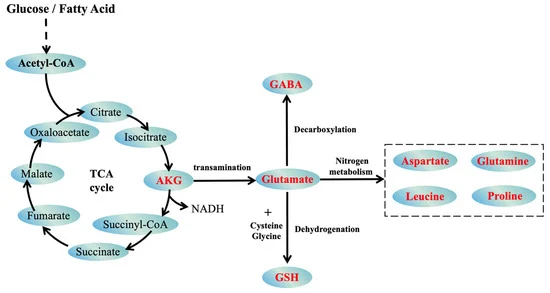
This groundbreaking article presents a unified theory of aging that integrates evolutionary biology, epigenetics, and metabolic regulation, offering a paradigm shift in our understanding of senescence. By synthesizing recent research on Horvath’s epigenetic clock, the GABA-glutamate-αKG axis, and the evolutionary layers of aging systems, the authors propose a compelling model where hormonal changes trigger the expression of short LARP1, a key orchestrator of four distinct aging systems. The theory elucidates how luteinizing hormone (LH), human chorionic gonadotropin (hCG), and follicle-stimulating hormone (FSH) differentially activate these systems, explaining gender-specific aging patterns. Furthermore, it reveals the unexpected role of SP-1 in linking sexual maturation to aging through regulation of MAO-A, MAO-B, and WRN. This comprehensive framework not only explains the acceleration of aging but also identifies novel therapeutic targets, potentially revolutionizing anti-aging interventions. By connecting hormonal changes, metabolic imbalances, and epigenetic dysregulation into a cohesive aging program, this article challenges long-held beliefs about the nature of aging and opens new avenues for extending healthspan and lifespan1.

Continue Reading →